
Your Joint Pain Has a Switch.
With Age, It Gets Stuck On.
A Yale-trained orthopedic surgeon explains the master switch of inflammation, what it wears away, and the 8-week study that found joint comfort improving in as little as 5 days.
Move Like You Used To:What a Surgeon Says About the Switch That Sticks With Age
It starts before you're out of bed. The first steps of the morning are a negotiation, and your knees set the terms.
Then come the stairs, taken one at a time. Then the ache that settles in after you've been sitting.
There's a way to move like you used to. It starts with a switch inside your cells, and almost nobody told you about it.
Somebody told you it's just age. Somebody told you to get in shape.
So you did what any sensible person does. You tried glucosamine. You tried turmeric. You added collagen and fish oil, then a brace and a cream.
Some of it helped, for a while. The stiffness came back anyway. And somewhere along the way you started to wonder what you were doing wrong.
You were doing nothing wrong. The problem was never your effort. The switch is the part of the story that rarely gets told.
Your Body Has a Thermostat for Inflammation. With Age, It Sticks on High.
Inside your cells sits a thermostat for inflammation. When you twist an ankle or cut a finger, it turns the heat up and the body's repair crew rushes in.
When the job is done, it turns the heat back down.
With age, it doesn't always reset.
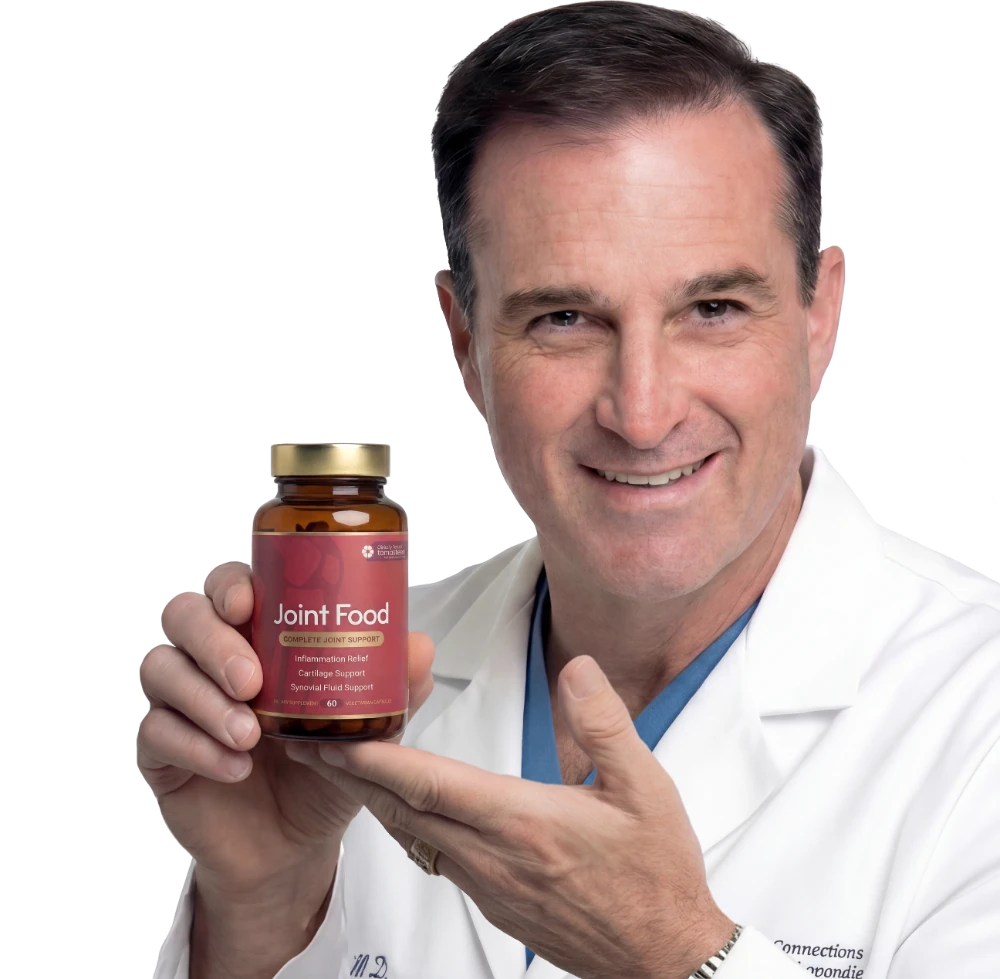
Orthopedic surgeon Dr. Rich Diana is a Yale School of Medicine graduate who also played running back at Yale and for the Miami Dolphins.
He calls the thermostat a "cellular master switch that unfortunately gets turned on as we age and through several lifestyle factors."
Stuck in the on position, he says, it "keeps inflammation running nonstop." That doesn't just cause pain and stiffness. It "also breaks down your joint cartilage and synovial fluid."
Cartilage is the padding between your bones. It has no blood supply of its own, so it "can't easily repair itself."
Synovial fluid is the oil that lets the joint glide.
Dr. Diana is blunt about what the padding and the oil go through: "Every step you take, every chair you sit in, every hill you climb, it all adds up."
Most people have never heard of that switch, because the pain gets all the attention. It's why the pain keeps coming back, and why the stiffness is waiting before you've taken a step.
Joint Food goes after the switch. Its lead ingredient, Tamasteen™, a patented combination of tamarind seed, turmeric and mangosteen, reduced the switch's activity by over 60% in animal studies.
Then researchers tested it on people. In an eight-week clinical study, participants noticed better joint comfort and flexibility within the first five days.
By the end, they had more than a 60% reduction in overall joint discomfort and an over 50% improvement in joint flexibility.
Five days is when the first change showed up. It isn't the finish line. The big numbers took eight weeks. Dr. Diana: "those benefits continued to build over time."
Former Miami Dolphin Turned Orthopedic Surgeon Explains the Switch Behind Joint Pain
Dr. Diana knows what hard use does to joints. At Yale he was an All-American who set a single-game rushing record. He played in a Super Bowl.
Then he went back to Yale for medical school and trained as an orthopedic surgeon at Yale New Haven Hospital.
Today he's the author of Healthy Joints for Life, and he takes Joint Food himself: "I've been pretty rough on my knees over the years, so I take joint food every day."
His reason: "I intend to keep using my original equipment as long as possible."
Customers describe the change in plain terms. One couldn't "get out of bed without climbing up the furniture." Now: "I just roll out in the morning."
Another: "Within weeks, I was climbing those stairs again no problem."
A third had stopped going out because of a knee: "I'd started staying home." Then: "I could sleep through the night again and getting in and out of the car wasn't painful anymore."
That's the promise. Mornings that stop being a negotiation. Movement you stop planning around. Not a few good hours, but the way you used to move.
And Dr. Diana says it isn't too late to start: "the earlier you start, the better, but it's never too late either."
The rest of this page covers three things. Why the switch sticks. What it takes from your cartilage and your joint fluid.
And the one question worth asking of anything you take for your joints: does it do anything about the switch?
Joint Food Is Slower Than a Painkiller
A pain reliever can take the edge off fast. Joint Food won't.
If you need the ache gone before dinner, this isn't the tool for that job.
In the study, the first change showed up on day 5. The big numbers took eight weeks.
That's the one honest trade, and the rest of this page is the reason. Quieting an ache and turning down what keeps it coming back are two different jobs.
It Isn't Just Age. And It Isn't You.
Pain that keeps coming back isn't proof you did something wrong. Age plays a part. It doesn't write the whole ending.
Look at the line on this chart.
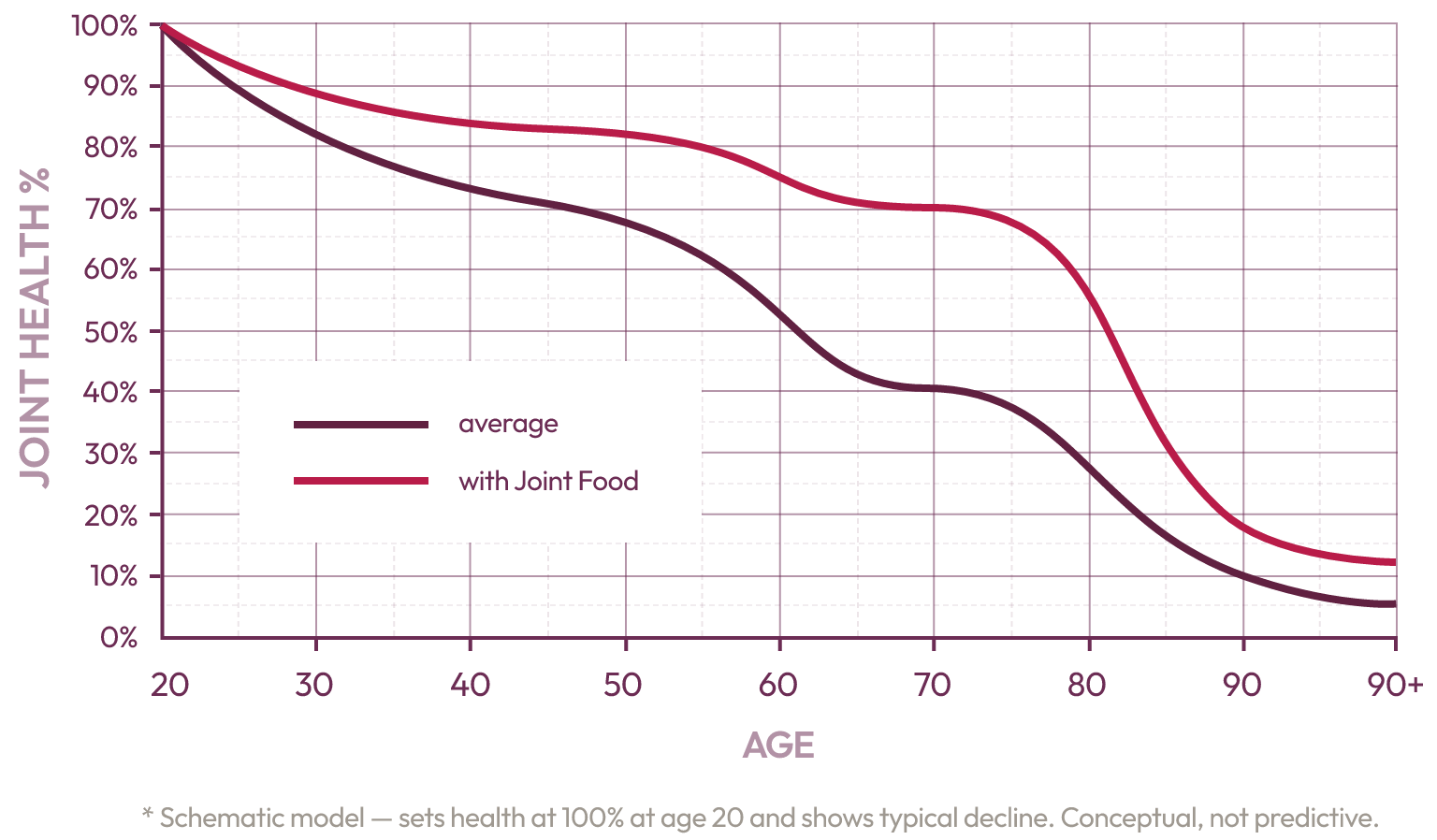
Dr. Diana: "This chart just shows the average decline, the average deterioration of joint health, and when it typically occurs." His goal is to show you "how not to be the average."
An average is the middle of a crowd. Where you end up is a separate question.
Age is one of several things that can turn the switch on. So when somebody told you it was just age, you got half an answer. This page is the other half.
"You can improve mobility and flexibility at any age if you address what we've identified as the three main factors behind joint problems." That's Dr. Diana.
He names three factors. Your effort isn't one of them.
The drawer of half-used bottles becomes one question: what keeps the switch on, and what turns it down?
You can stop asking what you did wrong. The real culprit has a name that sounds like a college fraternity.
The Joint-Pain Thermostat Almost Nobody Has Heard Of
Many people have heard of COX, the enzyme linked to joint pain and swelling. Or LOX, which Dr. Diana says "causes deeper, chronic inflammation inside the joint."
Then comes the part almost nobody hears.
Dr. Diana: "But most don't know that both of those are controlled by what we call the master switch of inflammation in our cells, a molecule called NF kappa beta."
You'll see it written NF-kB.
When he named it in an interview, the host said what you're thinking. "Sounds like a college fraternity."
Dr. Diana: "I know it sounds like one, but believe me, when this one gets active, nobody's having fun."
The switch tells COX and LOX to get to work. They make the chemicals that bring heat, swelling and pain. After a sprain, that's the repair crew arriving.
This isn't an idea invented for this page. The switch is described in published reviews, including Hayden and Ghosh in Genes & Development (2012) and Zhang, Lenardo and Baltimore in Cell (2017).
And it matters, for a reason Dr. Diana gives in two sentences. "Chronic inflammation is the primary root cause." Then: "It actually accelerates the other two."
The stiff morning, the stairs and the long sit aren't three separate problems. They share a source. That's an answer, in place of "you're getting older."
Why Does Joint Pain Keep Coming Back After Everything You Have Tried?
Think about the last thing that worked. The cream, the wrap, the pill. It worked, and then it didn't.
A professional dancer knows the pattern. "I've tried using wraps and creams which offered some temporary relief but an hour later the aches and stiffness would come back."
Here's why. In a young body, the switch turns the heat up for a job and back down when the job is done.
With age, Dr. Diana says, "when NF kappa beta is stuck in the on position, which happens with age and everyday things like weight gain, poor diet, or other lifestyle factors, it keeps inflammation running nonstop."
Those are ordinary things. A stuck switch isn't a character flaw.
Picture a smoke alarm that keeps shrieking after the toast is gone. By then the alarm is a bigger problem than the smoke ever was.
A stuck switch works the same way: the signal keeps going after the job is done.
Now follow the logic. If the switch stays on, inflammation keeps running. If inflammation keeps running, anything that only dulls the pain has to be taken again and again.
That's why relief fades. The cause is still on.
And a switch that stays on does more than hurt.
Your Cartilage Cannot Easily Repair Itself. Here Is What a Stuck Switch Takes From It.
A switch stuck on wears down the cartilage and thins the joint fluid.
Dr. Diana describes what happens to the cartilage: "Over time, your cartilage wears down, little cracks form, the surface becomes rough, and that one smooth, easy movement can turn into friction and irritation."
The cracks add up slowly, the way potholes do.
Then there's the oil. "When we're young, it's a nice silky oil, but with age, it thins and becomes more watery, less effective at reducing friction."
Picture greasing a squeaky door hinge with water instead of oil. The squeak doesn't go away. It gets louder.
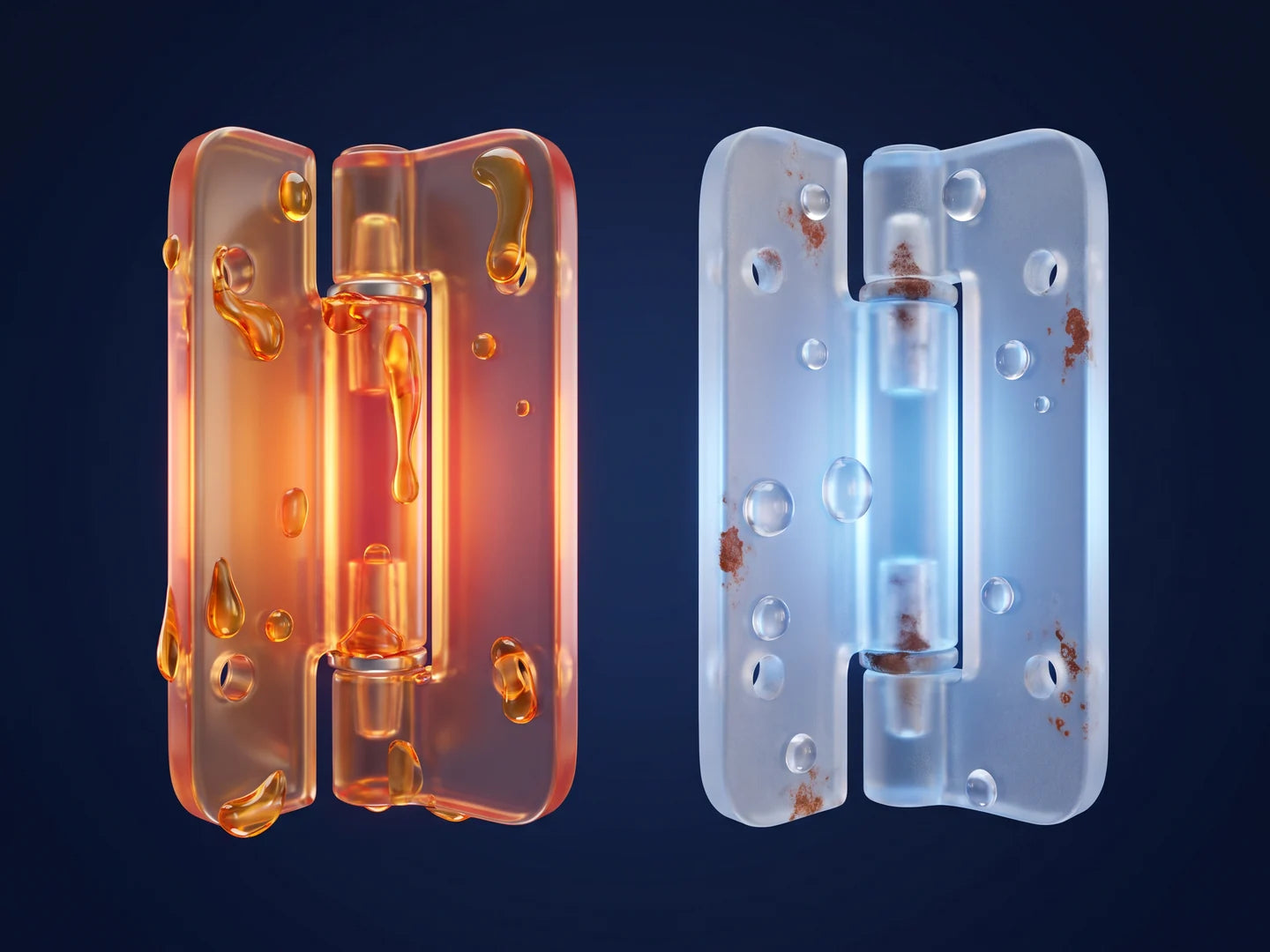
Dr. Diana says thinning joint fluid is "one of the main reasons older adults experience such stiffness, especially in the morning."
A rider put it plainly. "The x rays weren't good." Riding was a passion, "but I knew if I didn't start taking care of my knees, the future wouldn't be bright."
The stairs, the garden and the walking loop are worth taking care of while they're still easy.
Stop Chasing the Pain. Go After the Switch.
Pain relievers can quiet the alarm. They don't turn the switch down. And over the years they carry a cost.
Dr. Diana is talking about aspirin, ibuprofen, naproxen and acetaminophen.
His words: "And look, we've all used these from time to time. They can give short term pain relief, but over time, they can do real damage to your stomach, liver, or kidneys."
Customers say it in their own words. A golfer: "Before joint food, my pregame ritual consisted of painkillers, which I knew was bad for my body."
A school bus driver took over-the-counter pain meds every day for almost fifteen years. "Those drugs could have landed me in the hospital or worse."
Quiet the alarm and the switch is still on. That's also why a pain reliever works faster. Short term relief is the job it does.

None of this is a reason to stop a medicine your doctor gave you. Talk to your doctor about that.
What the golfer wanted instead was to be "taking care of my joints the right way."
A daily routine that doesn't depend on a painkiller.
Then there are the supplements.
You Have Tried Everything for Your Joints. Did Any of It Go After the Switch?
Each supplement on the shelf covers one lane. A shelf full of them is a shelf of single lanes.
Dr. Diana on omega-3s: "Omega-3s are great for your heart and brain, but they're not the long term solution for stiff, sore joints."
On fish, green-lipped mussel and krill oil: "they all only help ease discomfort temporarily. They don't support cartilage or synovial fluid."
In his opinion, the products he named share one gap: pain medicine, glucosamine and chondroitin products, and omega-3 supplements.
Dr. Diana: "None of these products address all three factors of joint aging: inflammation, cartilage breakdown, and synovial fluid decline the way joint food does."
Look at your own shelf. Turmeric. Collagen. Glucosamine. Fish oil. Each one is a bet on one lane.
A second dancer tried the same shelf. "I've tried everything for my joints. Omega oils, glucosamine, and chondroitin. I got some temporary relief from a few, but nothing like joint food."
The joint has three lanes. Inflammation, cartilage and joint fluid.

One daily formula instead of four bottles.
How to Turn Down the Switch Behind Joint Pain With One Daily Formula
A complete answer does two jobs. It turns the switch down. And it feeds the cartilage and the joint fluid.
A switch stuck on keeps inflammation running. Running inflammation breaks down cartilage and joint fluid, Dr. Diana says.
That calls for a formula that turns the switch down and feeds the joint.
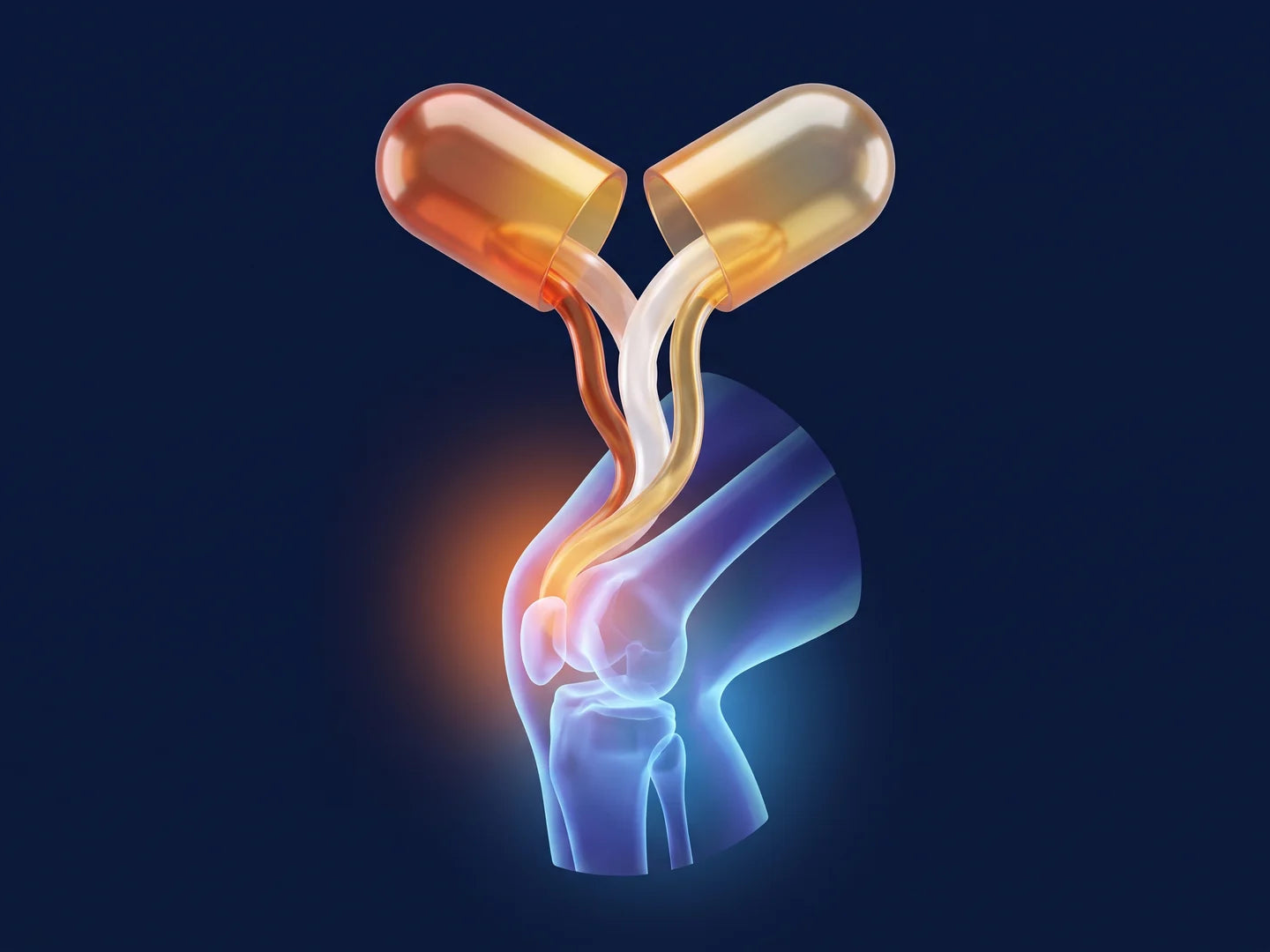
Dr. Diana counts three factors behind joint aging: "inflammation, cartilage breakdown, and synovial fluid decline." The first is the switch. The other two are the cartilage and the joint fluid.
Joint Food, he says, "not only targets inflammation, it also supports cartilage and helps maintain healthy synovial fluid."
The professional dancer wanted exactly that. "Something that not only provided relief but also helped me with my joint cartilage and lubricate my joints too."
Now you have a test to put to anything on the shelf.
Does it go after the switch? Does it feed the joint? Has its lead ingredient been tested against a placebo in people?
Joint Food can answer yes to all three. The drawer of bottles shrinks to one.
The 8-Week Study That Found Joint Comfort Improving in as Little as 5 Days
Take the third question first. Has it been tested in people?
For the switch, it uses Tamasteen™, a patented combination of three plants: tamarind seed, turmeric and mangosteen. You met the animal result earlier. That was animals. Here's what happened in people.
The study ran eight weeks. Participants were men and women, ages 40 to 70. Some took 300 mg of Tamasteen a day, the amount in Joint Food. Others took a placebo.
It was double-blind and placebo-controlled, the "gold standard" of clinical trials.
In eight weeks, participants had a 64% improvement in joint comfort, a 53% reduction in stiffness and a 54% improvement in physical function. They also improved in range of motion, walking and climbing stairs.
People on a placebo often improve too. That's why the study had a placebo group. Measured against it, the gains were significant across the board. They ran three to nine times larger than the placebo's.
Why This Is Not Just a Turmeric Capsule
The formula matters, because Tamasteen isn't just turmeric. Most turmeric supplements isolate a single active, curcumin. Tamasteen uses the full-spectrum root, plus two more plants.
Each of the three works through a different pathway in the body: tamarind seed for longer-lasting comfort, turmeric for fast action, mangosteen for antioxidant protection.

If you've seen a tamarind and turmeric capsule on a store shelf, those are real ingredients. Tamasteen adds a third plant, mangosteen. The three-plant combination is the one that's patented, and the one the study tested.
Joint Food's other ingredients split the work. Bromelain, an enzyme from pineapple, and Boswellia, the resin better known as frankincense, join Tamasteen on the inflammation side.
Collagen type II, MSM and natural vitamin C support the cartilage. Hyaluronic acid and cetyl myristoleate support the joint's lubrication. Ten ingredients in all.
Turn the switch down
Tamasteen™Tested in the study
 Tamarind seed
 Turmeric
 Mangosteen
 Bromelain
 Boswellia


Feed the cartilage
 Collagen type II
 MSM
MSM Natural vitamin C
Feed the joint fluid
 Hyaluronic acid
 Cetyl myristoleate
Supplement Facts
Serving Size: 2 CapsulesServings Per Container: 30
| Amount Per Serving | % Daily Value | |
|---|---|---|
| Vitamin C [from Natural Acerola Extract (Malpighia punicifolia L.) (fruit)] | 50 mg | 56% |
| Tamasteen(TM) Proprietary Blend: | 300 mg | * |
| [Tamarindus indica Extract (seed), Curcuma longa Extract (rhizome), Garcinia mangostana Extract (fruit rind)] | ||
| Proprietary Blend: | 367 mg | * |
| [Methylsulfonylmethane (MSM)], Bromelain, Hyaluronic Acid (as Sodium Hyaluronate), Boswellia serrata (Gum Resin) Extract, Cetyl Myristoleate (CMO), Collagen Complex (containing undenatured Type II Collagen) | ||
* Daily Value not established
The other seven weren't in the study. The numbers above belong to Tamasteen.
One limit, stated plainly. The study ran eight weeks. It's a strong signal and not the last word.
For you, that means a formula with numbers behind it, a first change to watch for in the first week, and a bigger one by the eighth.
A golfer, before and after.
| Before | After |
|---|---|
| "I used to spend the first half of a round just getting my shoulder warmed up before I could really swing." | "Now, my shoulder feels loose from the very first hole, and I'm scoring better than I have in years." |
A lot of this page rests on one doctor's word.
"I Intend to Keep Using My Original Equipment as Long as Possible"
Dr. Diana said that about his own knees. A doctor you've never met is easy to doubt, so here's what you can check yourself.
His path runs through one school, then the NFL, then the same school again.
- Yale College. First Team All-American running back and First Team Academic All-American. He graduated cum laude in molecular biophysics and biochemistry.
- The Miami Dolphins. Drafted in 1982. He played in Super Bowl 17.
- Yale School of Medicine. Class of 1987.
- Yale New Haven Hospital. His orthopedic residency, 1988 to 1992, then a sports medicine fellowship.
- Connecticut Orthopaedics. He has practiced there since 1993. He's board-certified, has performed over 8,000 surgeries, and spent five years on the Boston Red Sox medical staff.
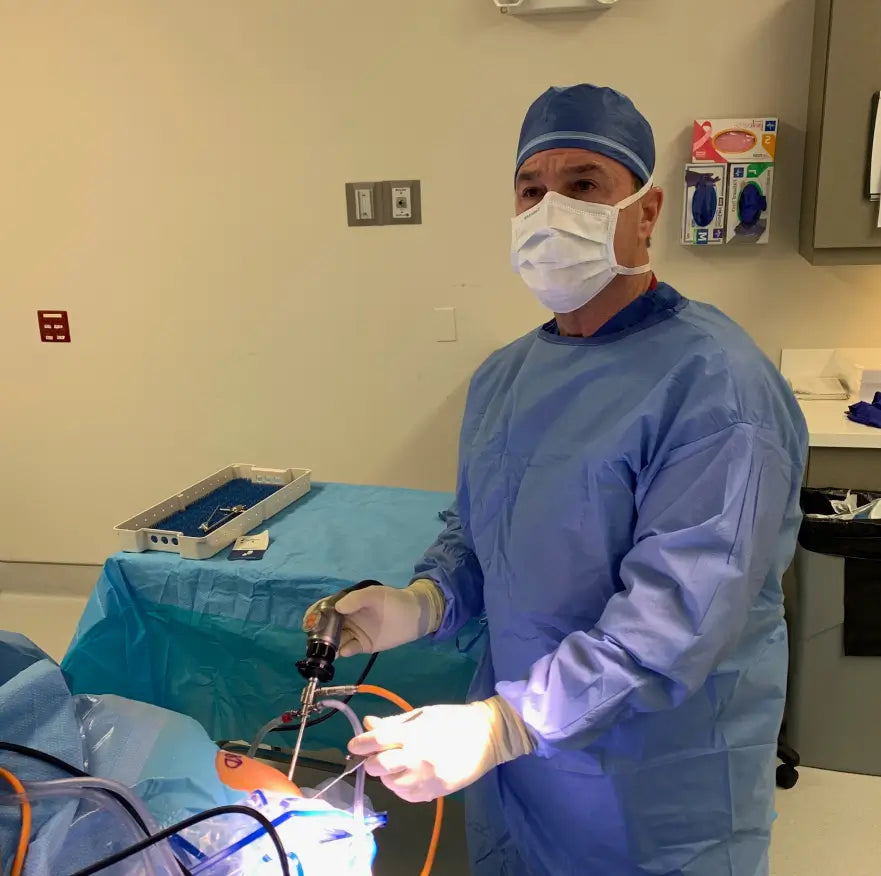
In 1981, Sports Illustrated profiled him as one of the country's leading runners and a premed student with a 3.5 average.
In the season opener he gained 196 yards, a Yale single-game rushing record. That year he finished tenth in the Heisman voting.
He's also the author of Healthy Joints for Life.
Dr. Diana: "I recommend joint food to my patients, especially seniors."
He also takes it himself, every day.
Now the straight part. This page told you Joint Food is slower than a painkiller. It told you the study ran eight weeks. Nobody here is promising magic.
Golden Years, Golden Joints, the program Joint Food is part of, says it too: "steady practice, more than any pill or procedure, is the most effective pain management."
It Builds Over Weeks, and It Is Not Too Late
Here's what to expect: a slope. Small changes first, bigger ones by week eight.
Customers describe the same slope in their own words.
- A dancer: "Within the first two weeks I could feel my flexibility and movement coming back."
- A 73-year-old with a troublesome left knee: "by the end of the first month I honestly couldn't believe the difference."
- A school bus driver, 71, whose ankle and hip kept acting up: "within just a few weeks I felt like a new man."
- A rider: "within weeks, I was getting around better."
- Someone with a nagging hip, "not really expecting much": "Every week, things just got better."



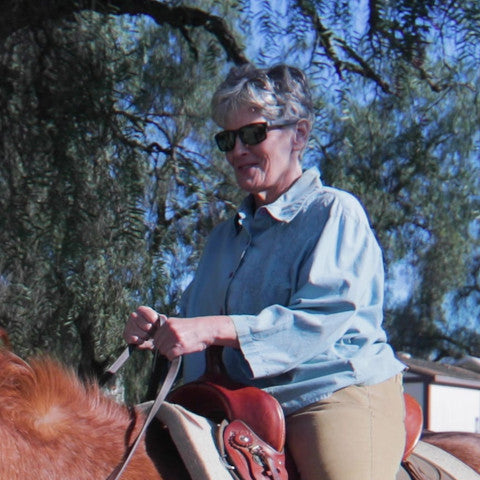
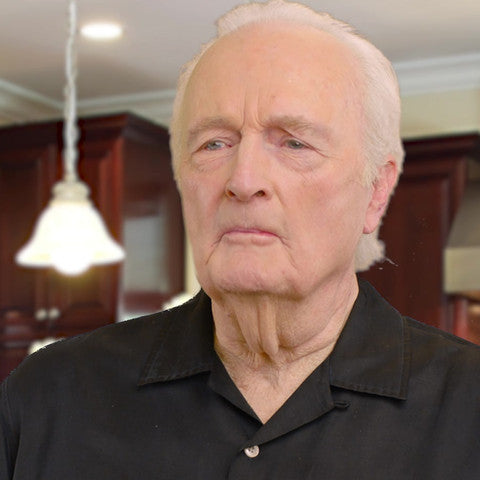
The study measured knees. These customers describe hips, ankles, hands and shoulders as well, in their own words.
And it isn't too late. "I'm seventy one and I drive a school bus." After a few weeks: "I was back to doing everything I love driving, walking, even my stained glass again."
Before and After, in Their Own Words
Here's how three customers put it.
| Before | After |
|---|---|
| "Mornings used to be the worst. I'd wake up stiff and sore." | "I'm getting so much more done every day, and even my mood's better now that I can move without the pain." |
| "I couldn't even think about using a shovel before joint food." | "Now it's a piece of cake." |
| "I could hardly hold the canvas or stitch for very long and then I almost gave it up." | "My hands feel great again and I'm back to stitching every day even my most detailed pieces." |
Pain that keeps coming back has a cause, and the cause can be turned down. The joint can be fed. One daily formula is built around both, and the study says what it did.
Mornings that stop being a negotiation. Stairs you stop counting. The way you used to move.
The 73-year-old with the left knee ended on this line: "With joint food, I'm moving like I used to and it feels amazing."
Dr. Diana's closing line to his audience: "Your joints and your family will thank you."
What Joint Food customers say
350,000 Joint Food customers
"Back up and moving again."
"It was Joint Food that took away my aches and stiffness and got me back up and moving again. So thank you, Joint Food."†
Freddie
"I could stand again."
"I couldn't stand over the sink or dishwasher for very long... I'm back in the kitchen and my garden has never looked better."†
Theresa
"Back to tennis again."
"I love playing tennis... I switched to pickleball, but my knees still slowed me down. With Joint Food, not only can I play pickleball, but I'm back to tennis again too."†
Michael
"Nothing like Joint Food."
"I've tried everything for my joints. Omega oils, glucosamine, and chondroitin. I got some temporary relief from a few, but nothing like Joint Food."†
Marie
"Mornings used to be the worst."
"I'd wake up stiff and sore. Some days my whole body ached. It took forever just to get moving. Then I started taking Joint Food, and it's been a lifesaver. I'm getting so much more done every day."†
Christopher
"Lots of steep stairs every day."
"A few years ago, my knees got so bad I could barely make it up and down. Nothing really helped until I tried Joint Food. Within weeks, I was climbing those stairs again no problem."†
Marianne
"Now I just roll out in the morning."
"My back and my left knee used to be so stiff that I couldn't even get out of bed without climbing up the furniture... I can even climb a ladder again."†
Michael
"Joint Food is the real deal."
"For years I got by taking over-the-counter pain meds... Then I saw Joint Food on TV and thought, why not? Within just a few weeks I felt like a new man. I was back to doing everything I loved: driving, walking, even my stained glass again."†
Michael
†Results may vary. Not everyone will experience the same results. Real Joint Food users, compensated for their time.
Here Is How to Start
It's one daily formula, the same one Dr. Diana takes himself. Your order starts below.


